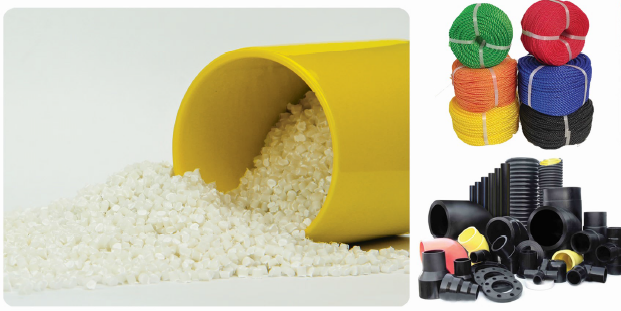
Applications of Polyethylene in Plastic Extrusion
Versatile Polymers for Extrusion
Extrusion is a process used in many industries to produce products with consistent properties. It involves forcing materials through a die to achieve the desired shape. Polyethylene, particularly High-Density Polyethylene (HDPE), is a versatile polymer with numerous applications in extrusion due to its unique characteristics. HDPE is well-known for its high strength-to-density ratio, chemical resistance, and durability, making it an ideal choice for extrusion projects.
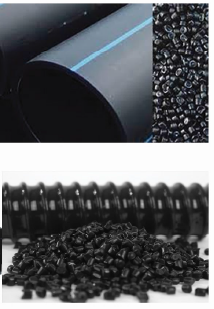
The remarkable processability of polyethylene is one of the primary reasons for its widespread use in extrusion. When melted, polyethylene exhibits high fluidity, making it easy to feed through extrusion equipment and ensuring consistent product profiles. Furthermore, its high thermal stability and low viscosity during melting make it appropriate for a wide range of extrusion processes. Polyethylene offers significant cost savings and environmental benefits. Polyethylene is a financially viable option for extrusion production due to its widespread availability and low cost compared to other technical polymers.
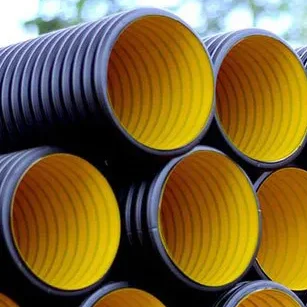
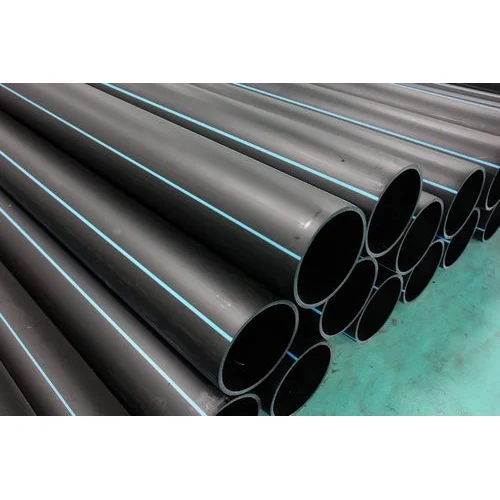
Extrusion Process
Extrusion is the process of forcing material through a die to create a desired shape. A die is a small disk with a specific size and shape of the opening.
Pellets of polymer material are fed through a hopper into an extruder. The polymer is melted and softened by heating elements that are placed over the barrel. After that, a feeding screw moves the material forward and forces it through a die—which is typically composed of steel—to take on the required shape. The product is cooled in a water bath or by forced air as it exits the die.
Polymer extrusion is a continuous process that continues as long as raw pellets are available. Extrusion is mostly used for thermoplastics, though it can also be used for thermosets and elastomers. In this case, the material in the extruder melts and heats, forming cross-links.
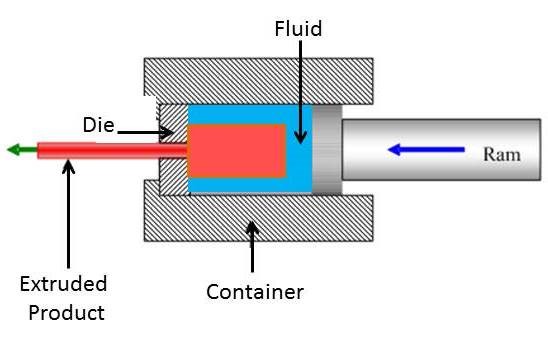
A simple schematic of the extrusion process
Importance of Material Selection
The material you choose for your project determines the extruded part’s overall functionality and manufacturability. The first step in choosing a polymer granule is to determine the properties that your part requires, such as strength, rigidity and flexibility, and resistance to chemicals and the environment. You can also save money by choosing a more common material that meets your product’s end-use requirements over one that is more exotic or uncommon.
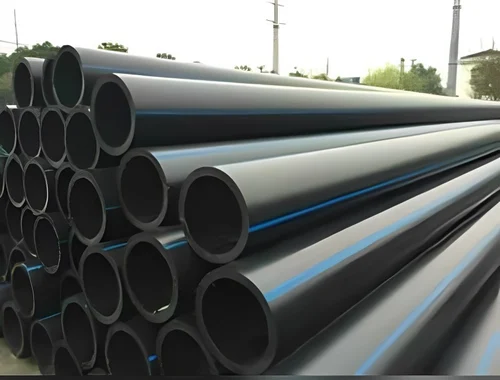
Polyethylene (HDPE) Extrusion Grades
| Grade | MFI | Density | Application |
|---|---|---|---|
| PE100 | 0.22 (190°C / 5kg) | 0.948 | top quality PE-100 pressure pipes for all purposes such as gas , water , and sewage transportation at higher pressures |
| HD-EX3 | 0.45 (190°C / 5Kg) | 0.945 | pressure pipe - drinking water and gas pipe - discharge pipes - sewer pipes and their fittings |
| HEX 4460 PE80+ | 0.33 (190°C/5Kg) | 0.944 | Drinking Water Pipe - Drainage Pipe - Plumbing |
| HD-5000S | 0.8 (190°C/2.16kg) | 0.954 | fishing-net rope-agricultural net-tarpaulin-woven sack |